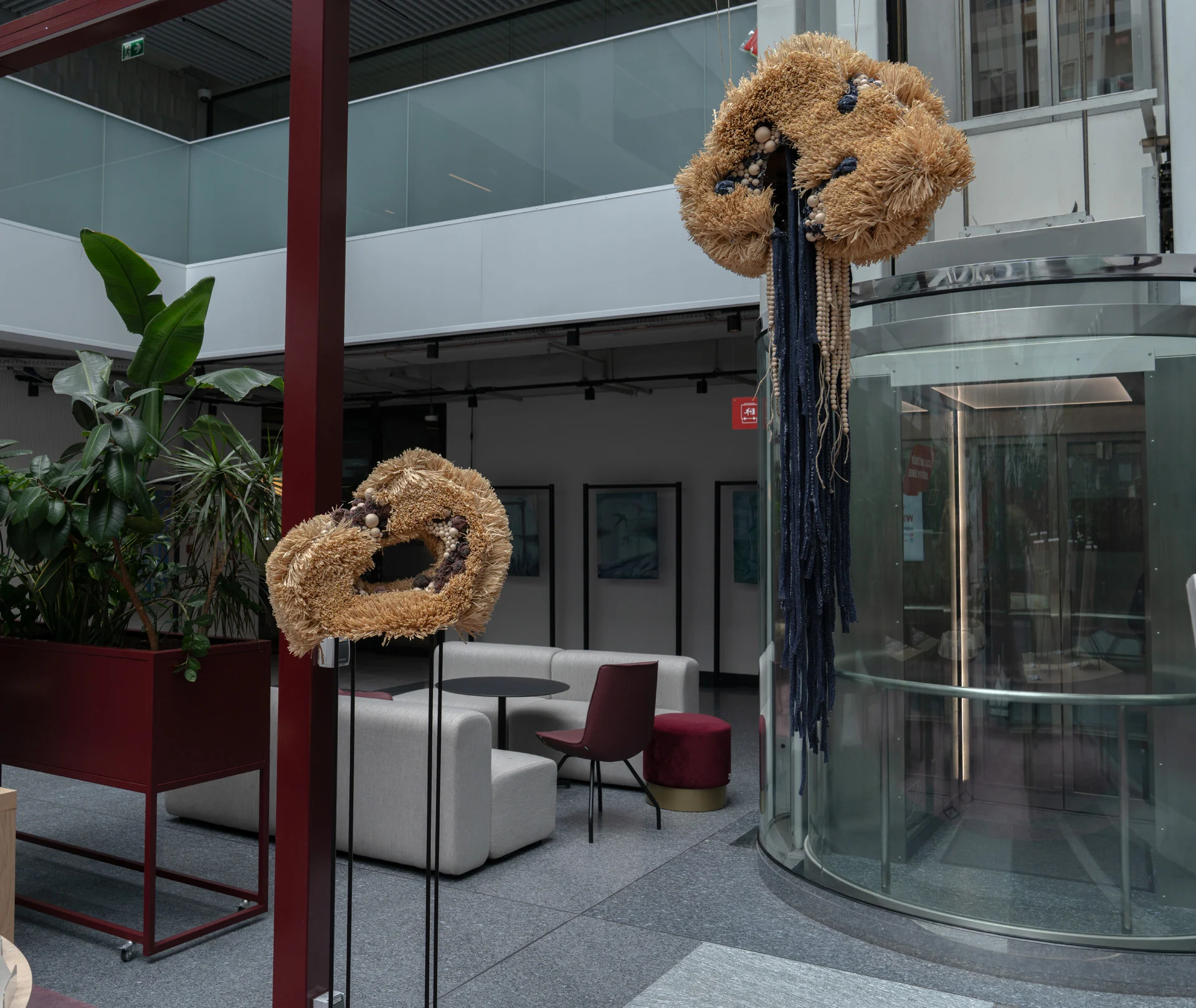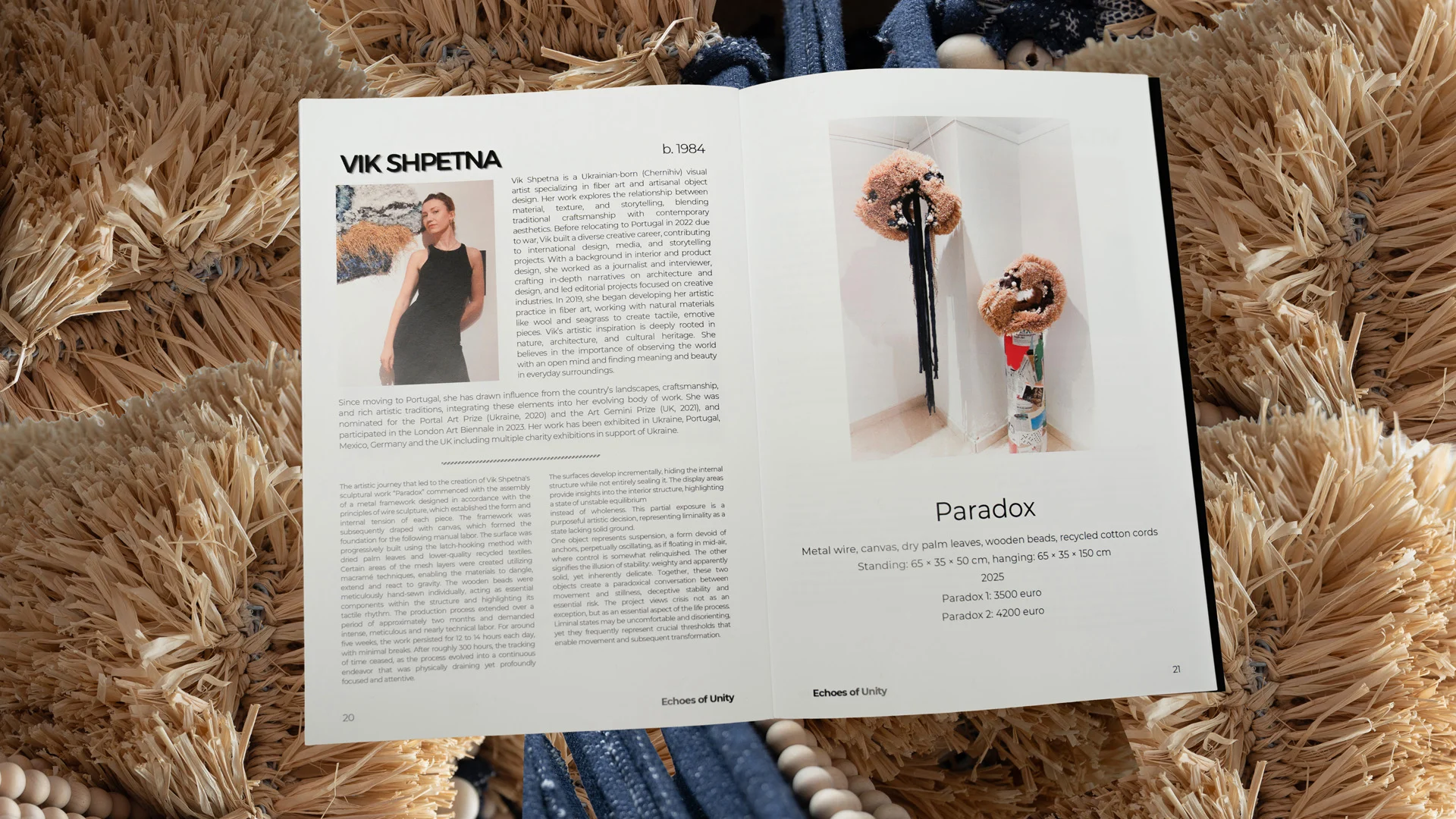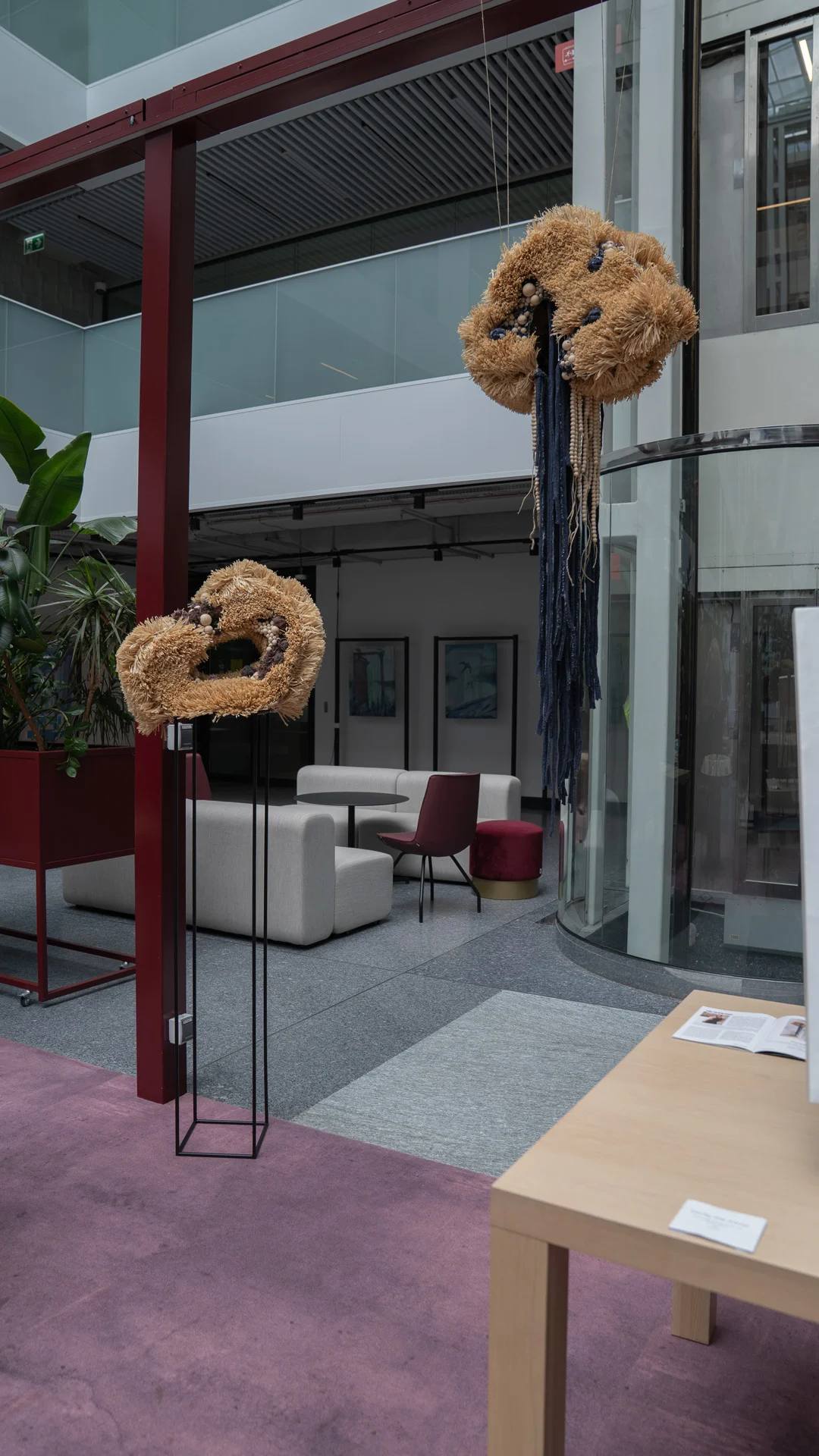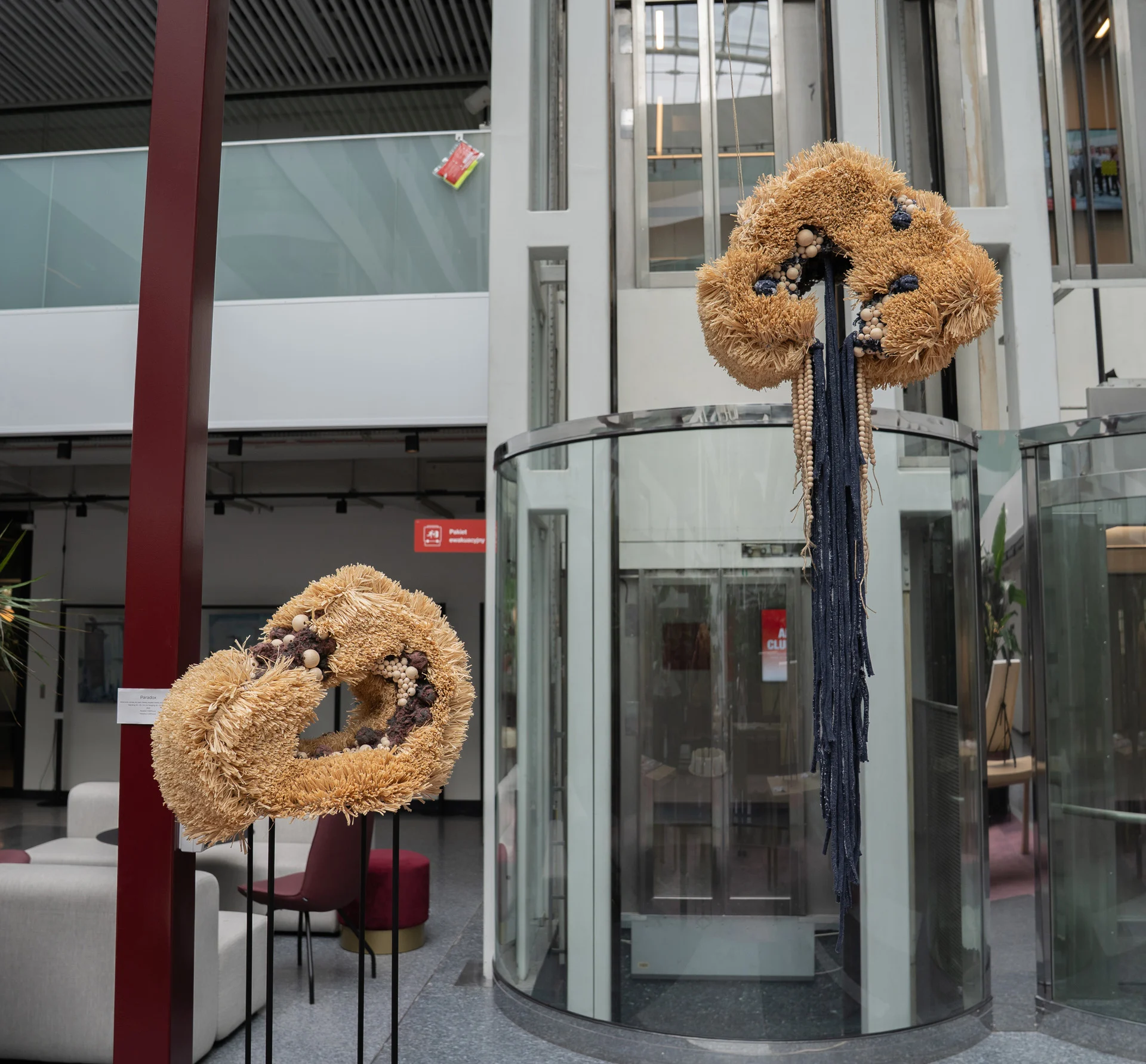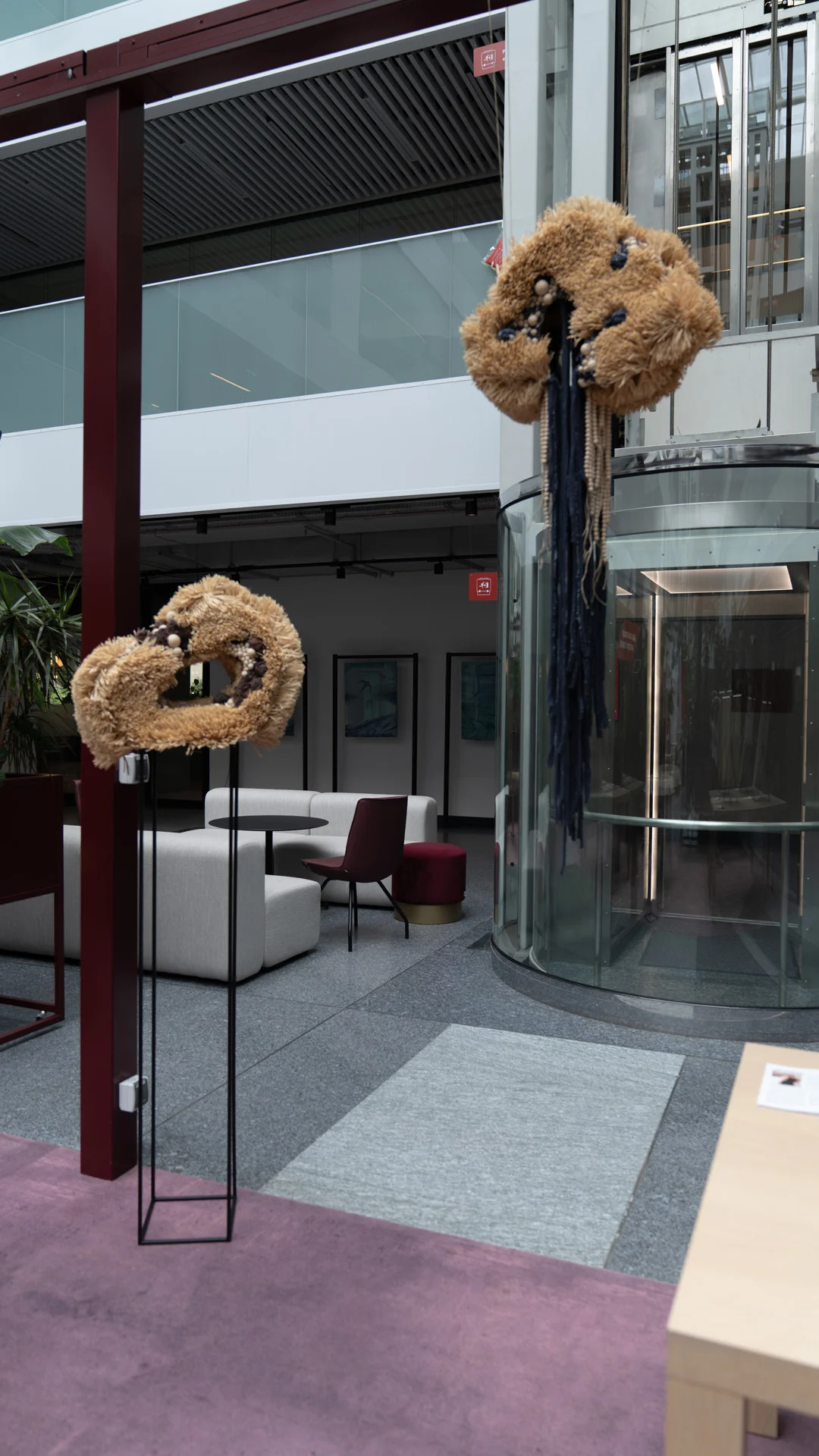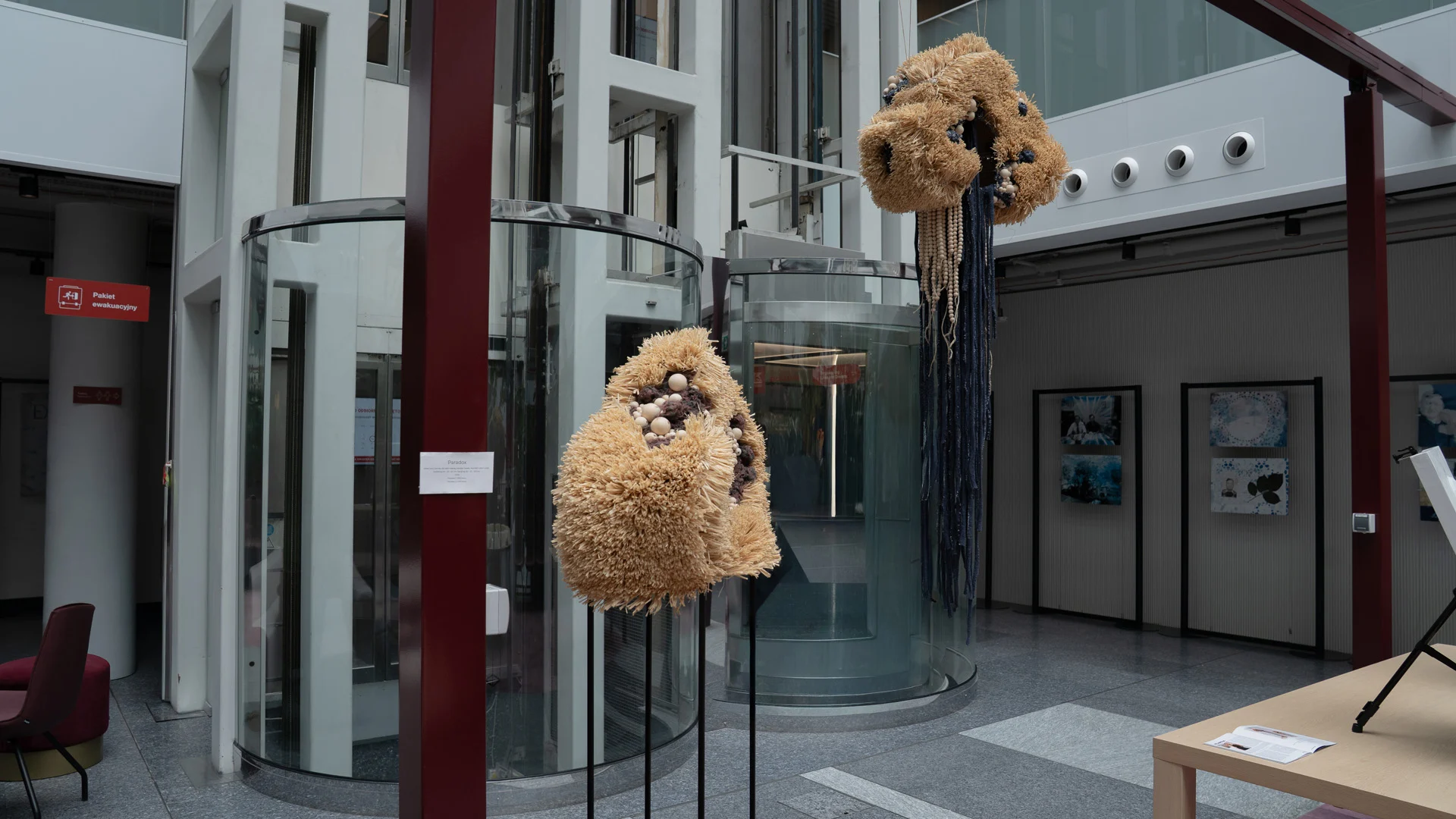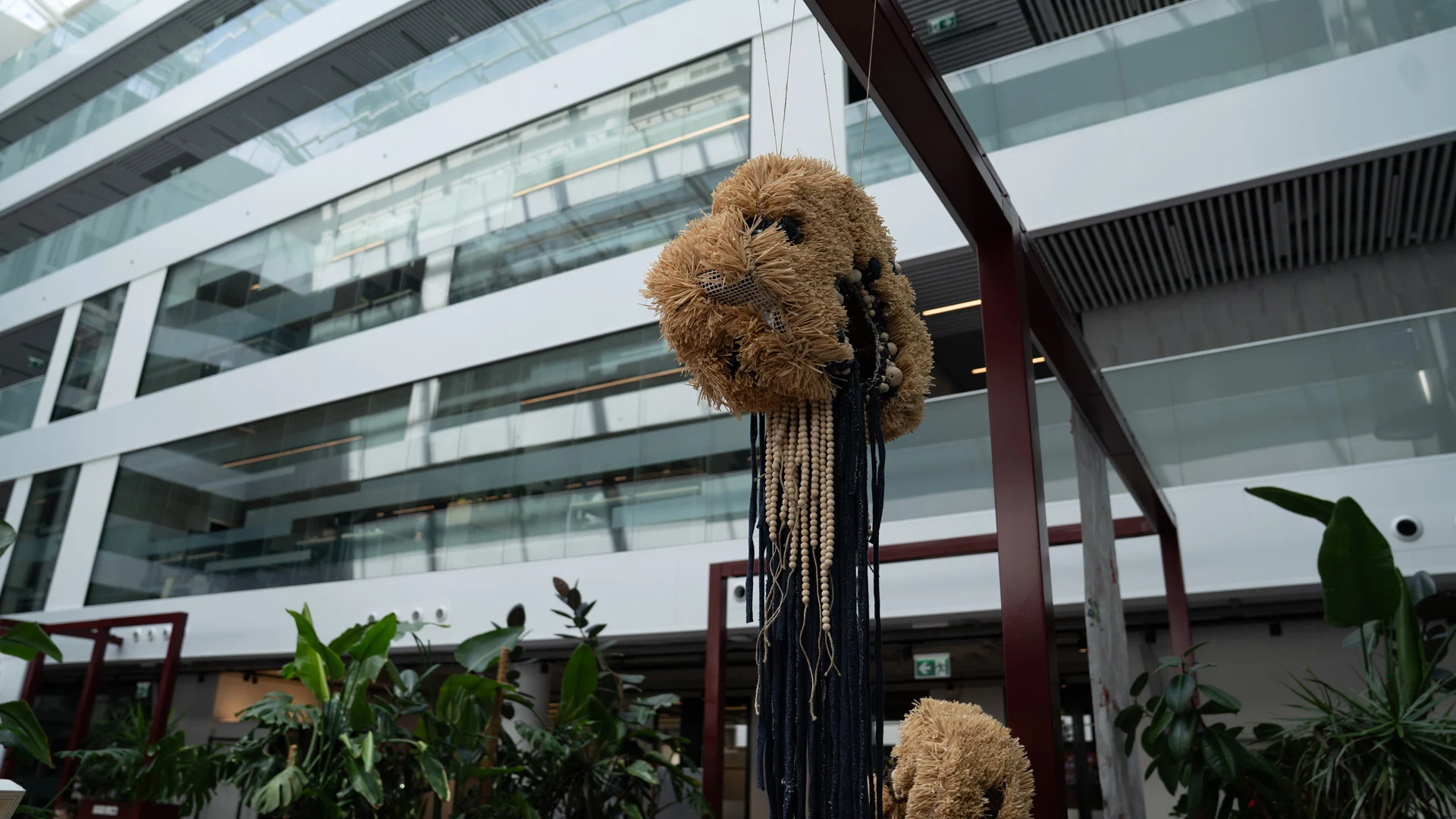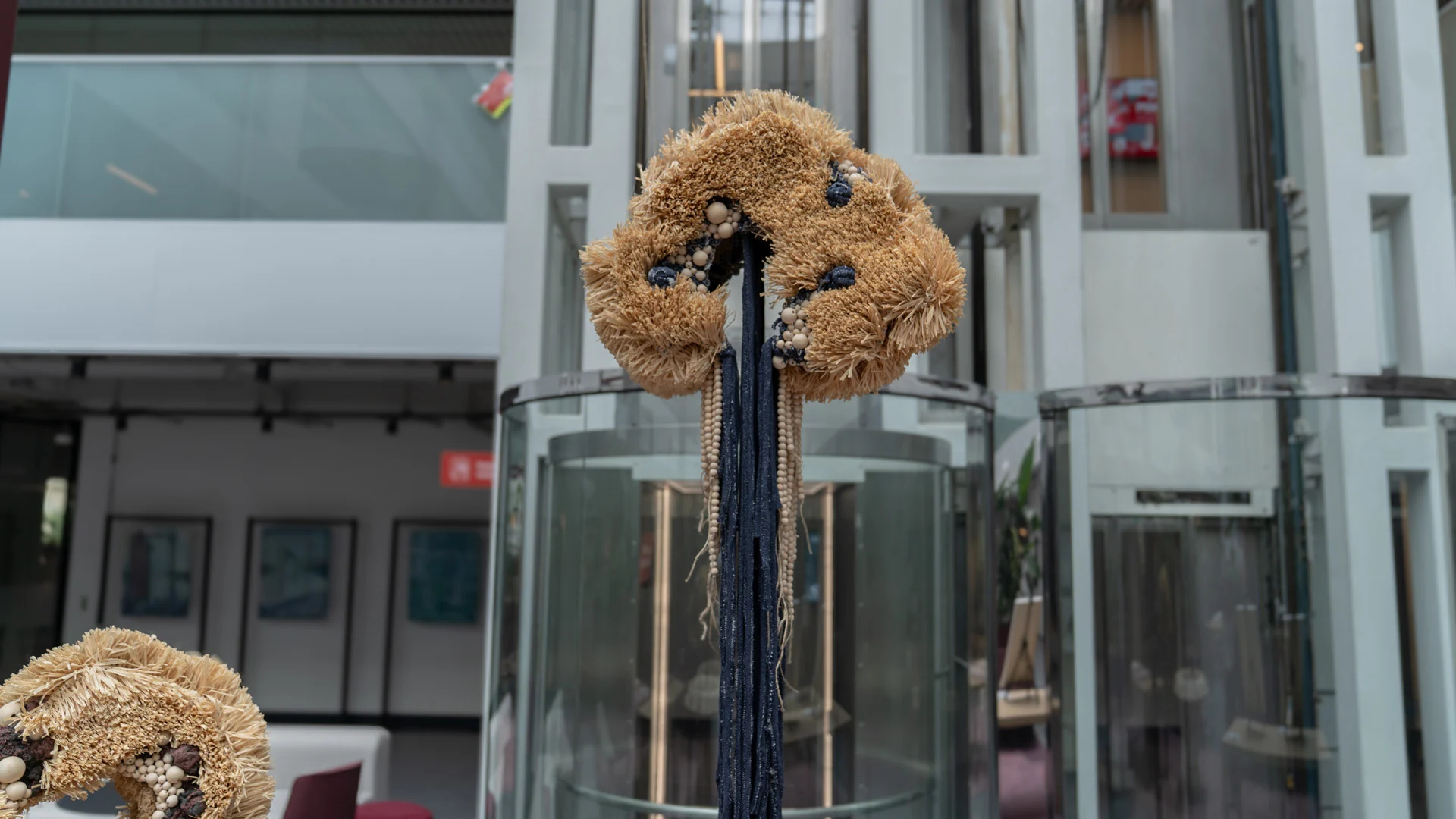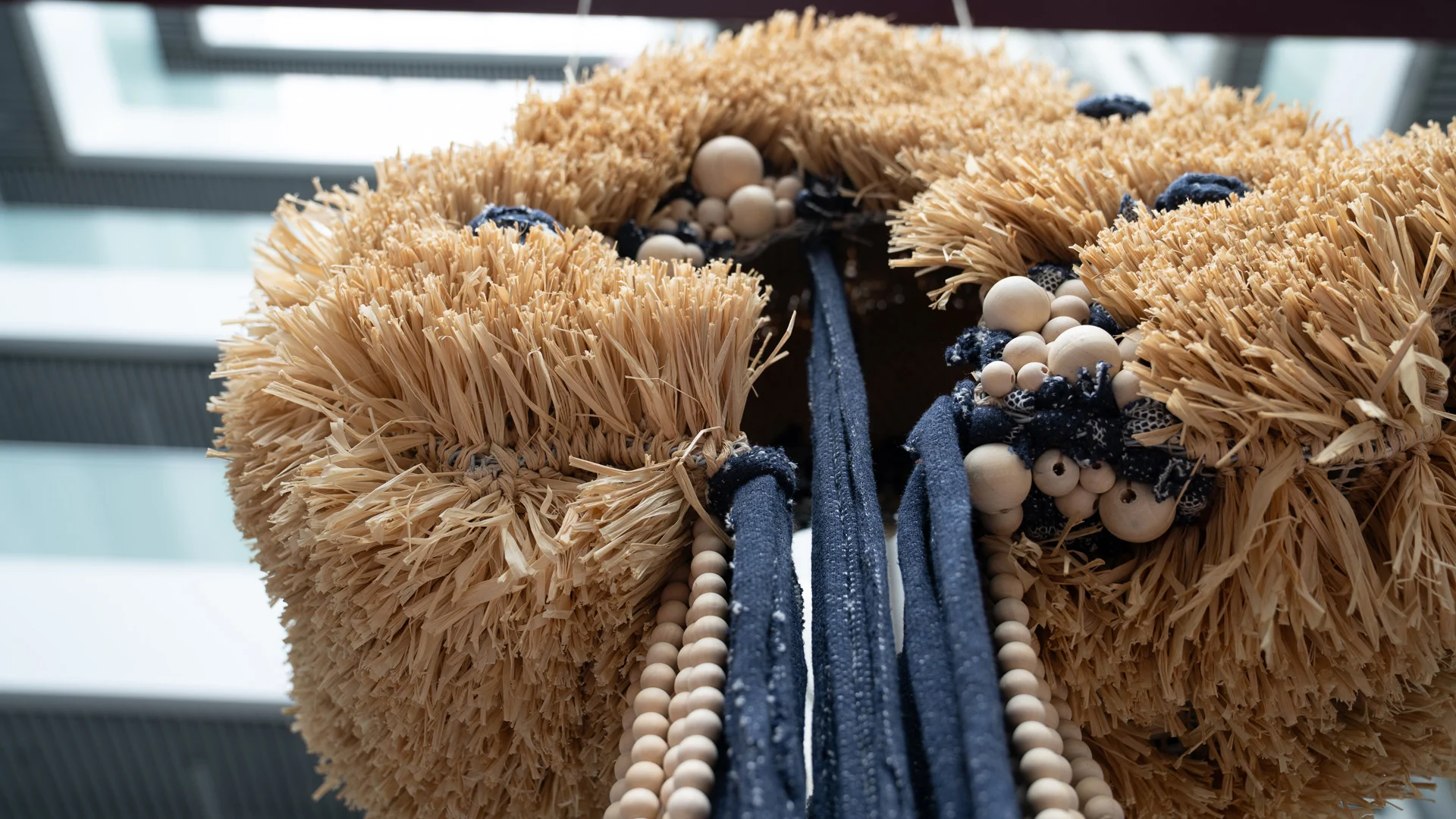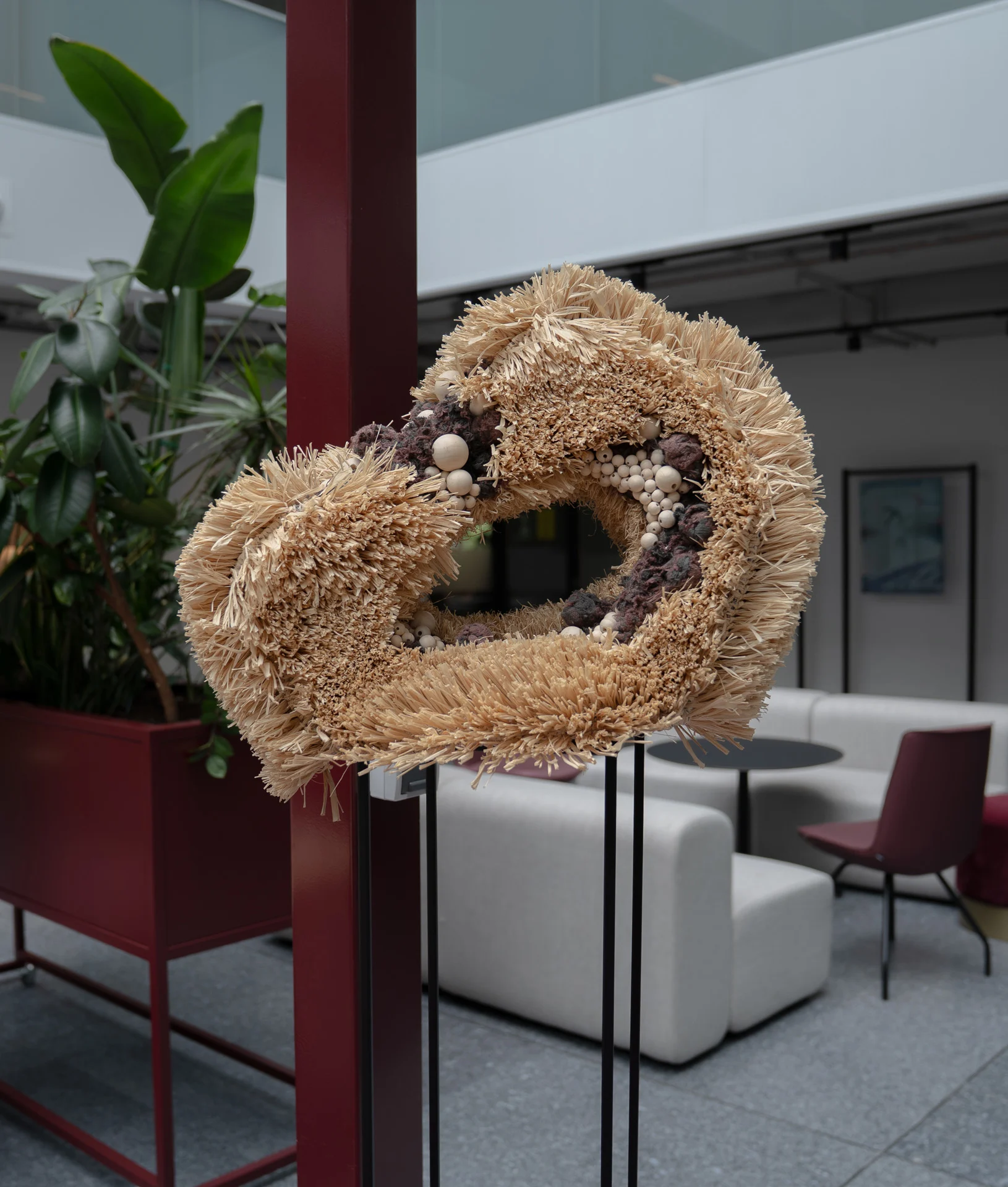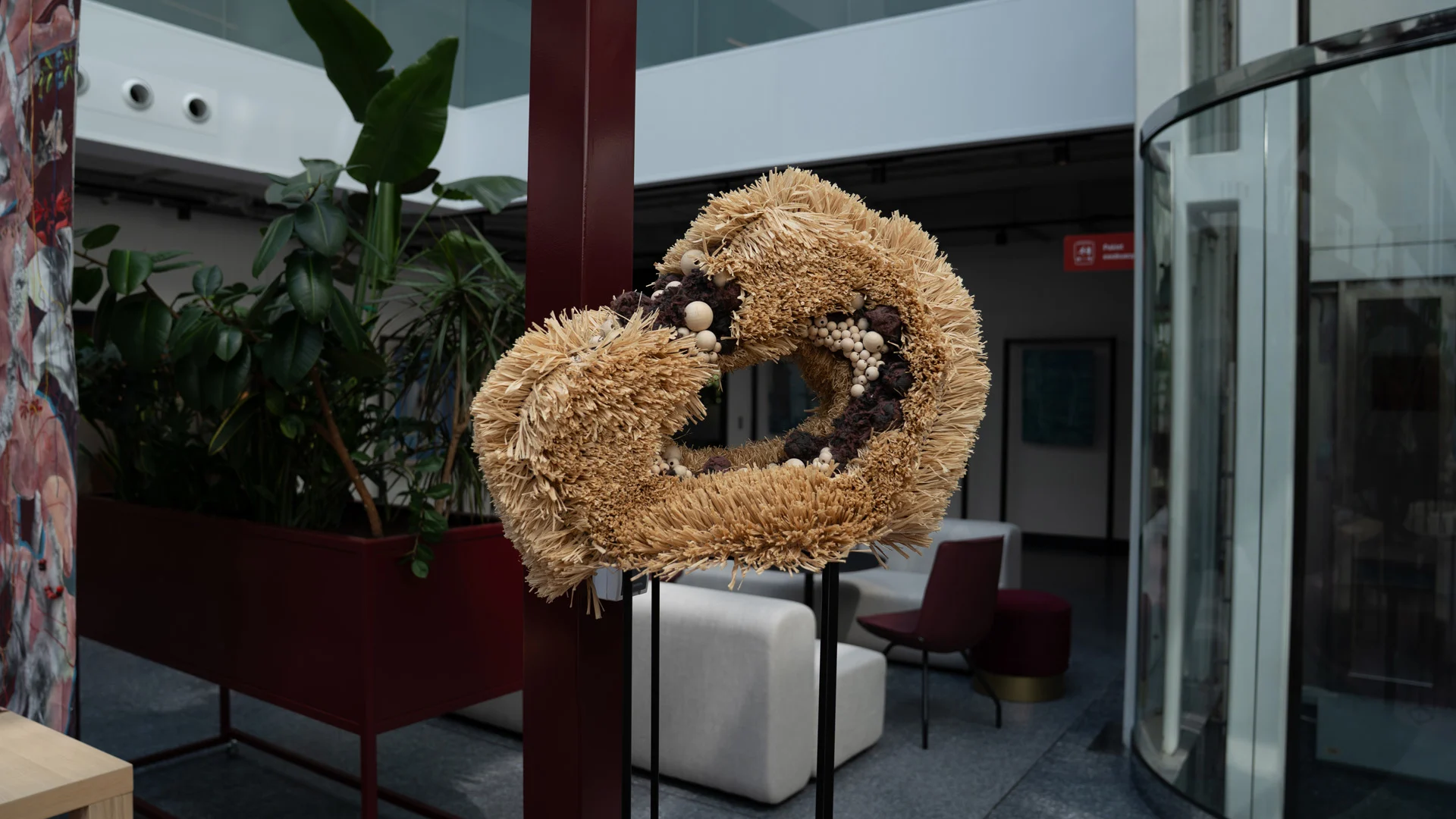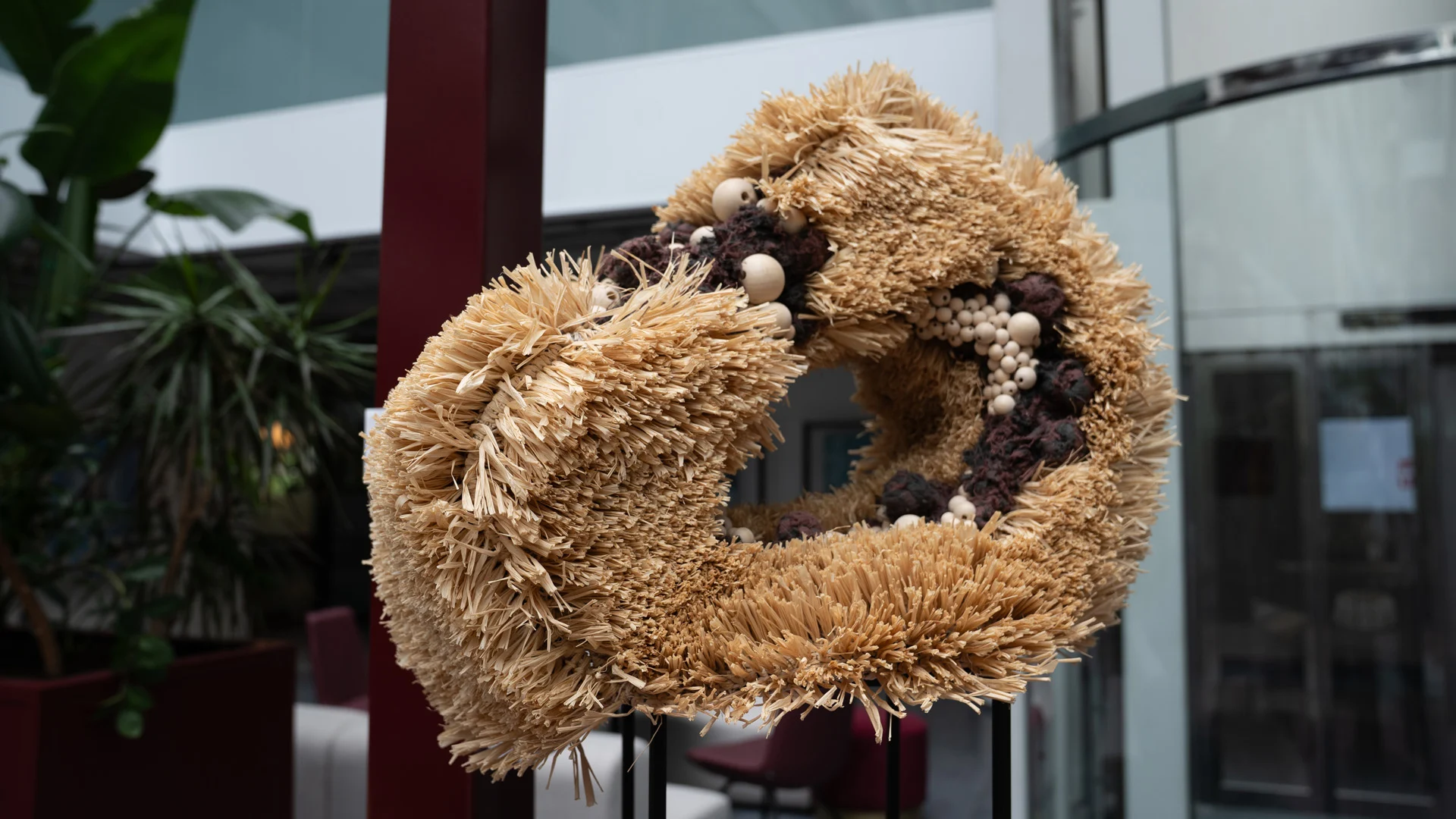
The artistic journey that led to the creation of Vik Shpetna’s sculptural work “Paradox” commenced with the assembly of a metal framework designed in accordance with the principles of wire sculpture, which established the form and internal tension of each piece. The framework was subsequently draped with canvas, which formed the foundation for the following manual labor. The surface was progressively built using the latch-hooking method with dried palm leaves and lower-quality recycled textiles. Certain areas of the mesh layers were created utilizing macramé techniques, enabling the materials to dangle, extend and react to gravity. The wooden beads were meticulously hand-sewn individually, acting as essential components within the structure and highlighting its tactile rhythm.
The production process extended over a period of approximately two months and demanded intense, meticulous and nearly technical labor. For around five weeks, the work persisted for 12 to 14 hours each day, with minimal breaks. After roughly 300 hours, the tracking of time ceased, as the process evolved into a continuous endeavor that was physically draining yet profoundly focused and attentive. The surfaces develop incrementally, hiding the internal structure while not entirely sealing it. The display areas provide insights into the interior structure, highlighting a state of unstable equilibrium instead of wholeness. This partial exposure is a purposeful artistic decision, representing liminality as a state lacking solid ground.
One object represents suspension, a form devoid of anchors, perpetually oscillating, as if floating in mid-air, where control is somewhat relinquished. The other signifies the illusion of stability: weighty and apparently solid, yet inherently delicate. Together, these two objects create a paradoxical conversation between movement and stillness, deceptive stability and essential risk.
The project views crisis not as an exception, but as an essential aspect of the life process. Liminal states may be uncomfortable and disorienting, yet they frequently represent crucial thresholds that enable movement and subsequent transformation.