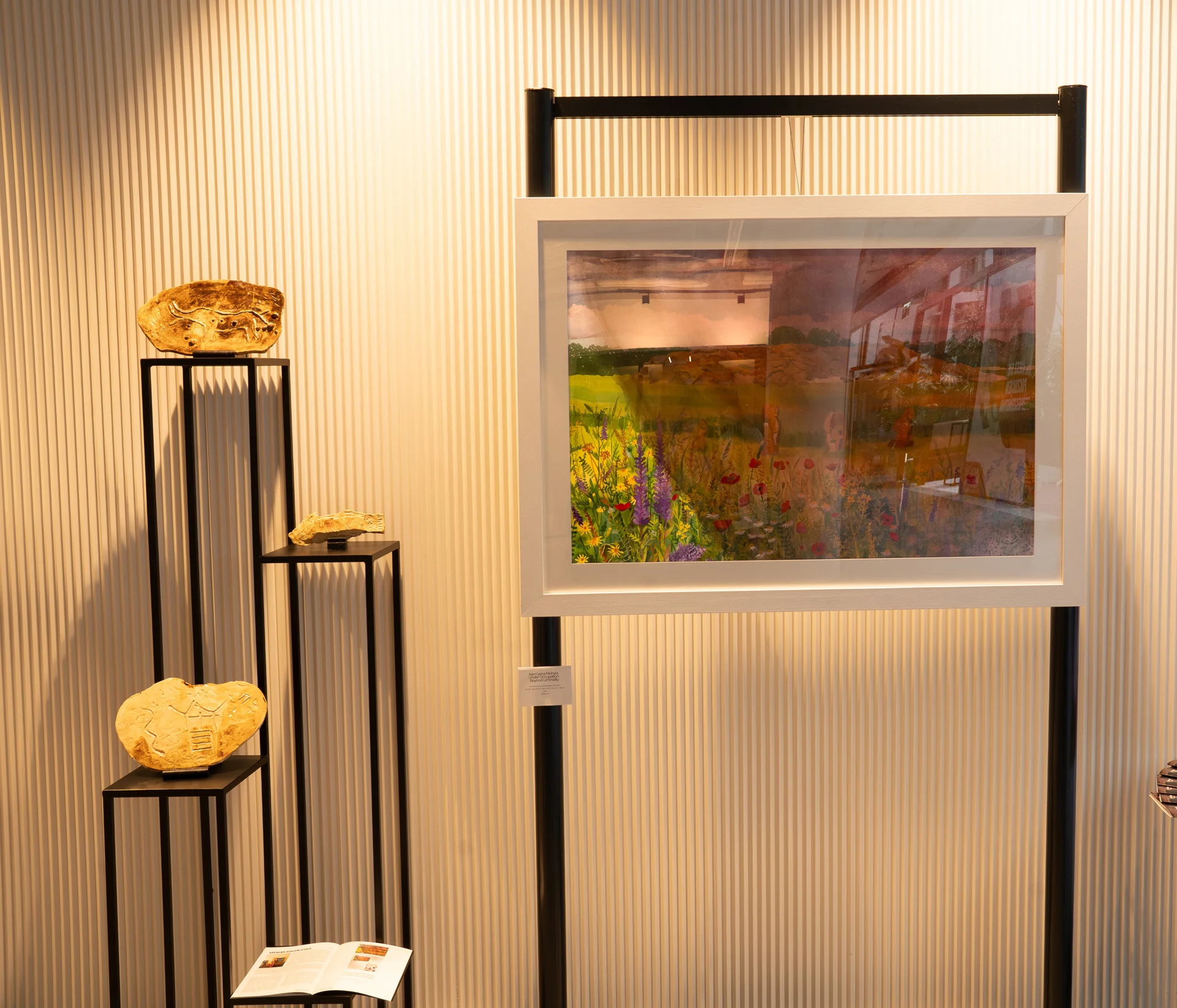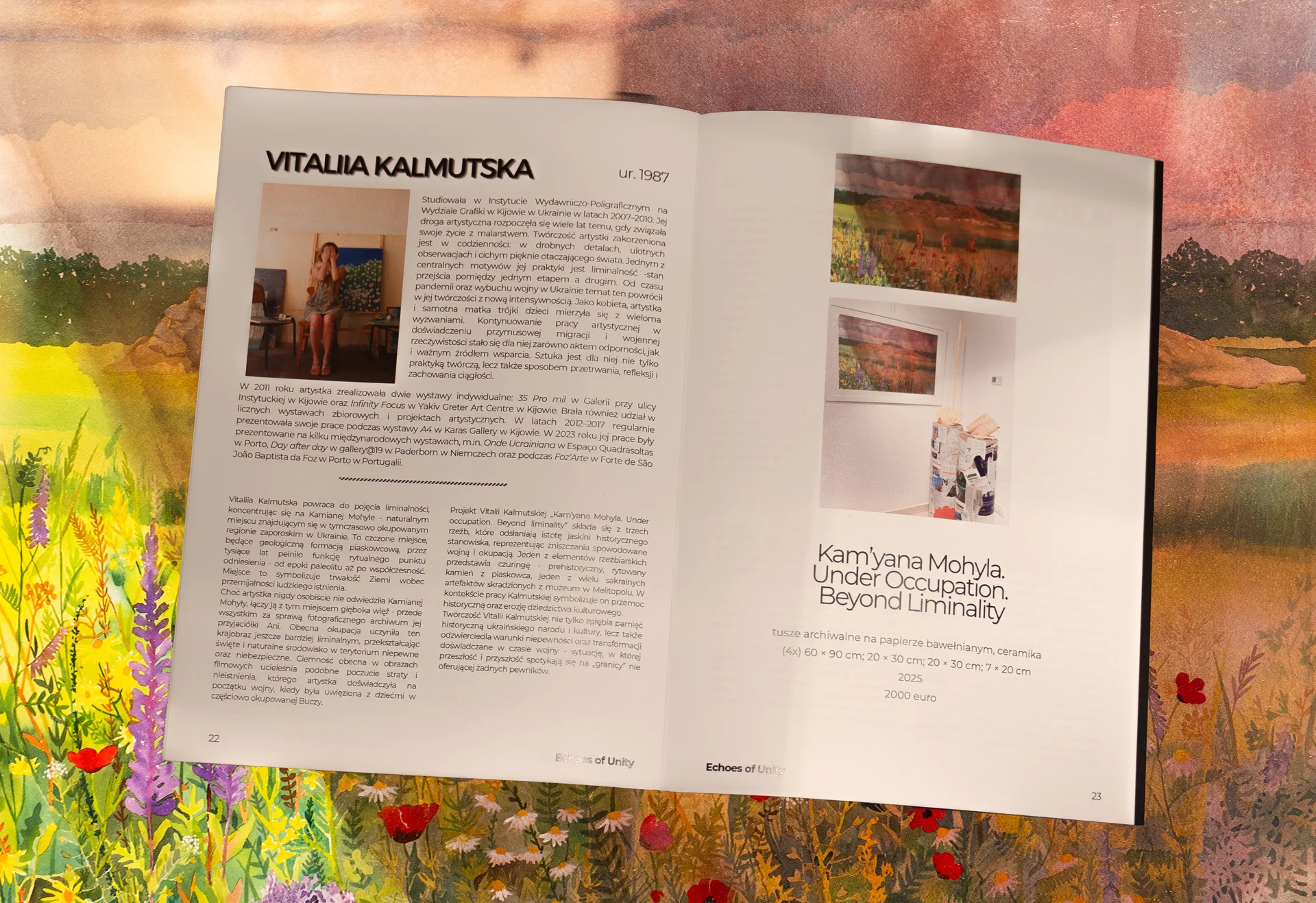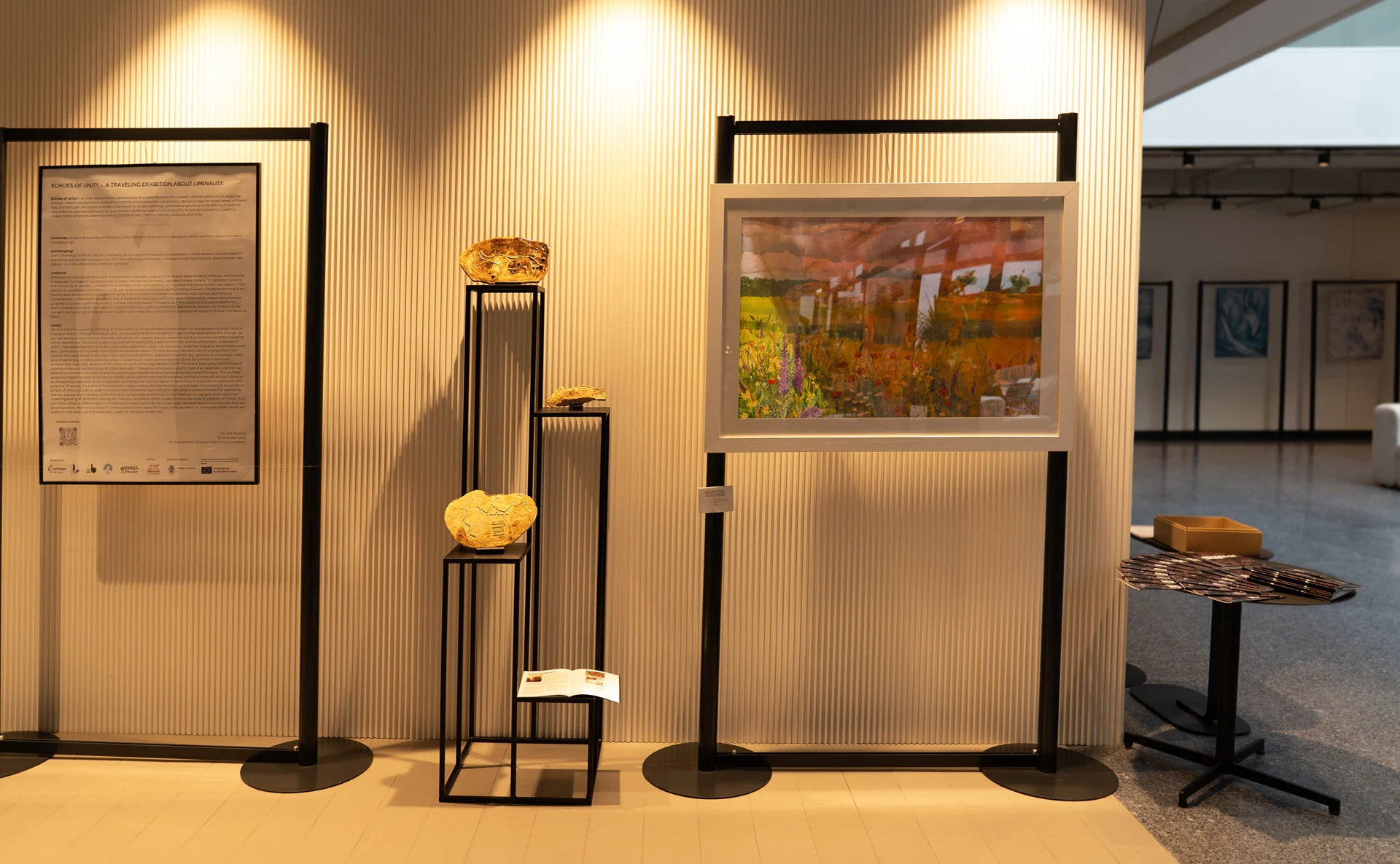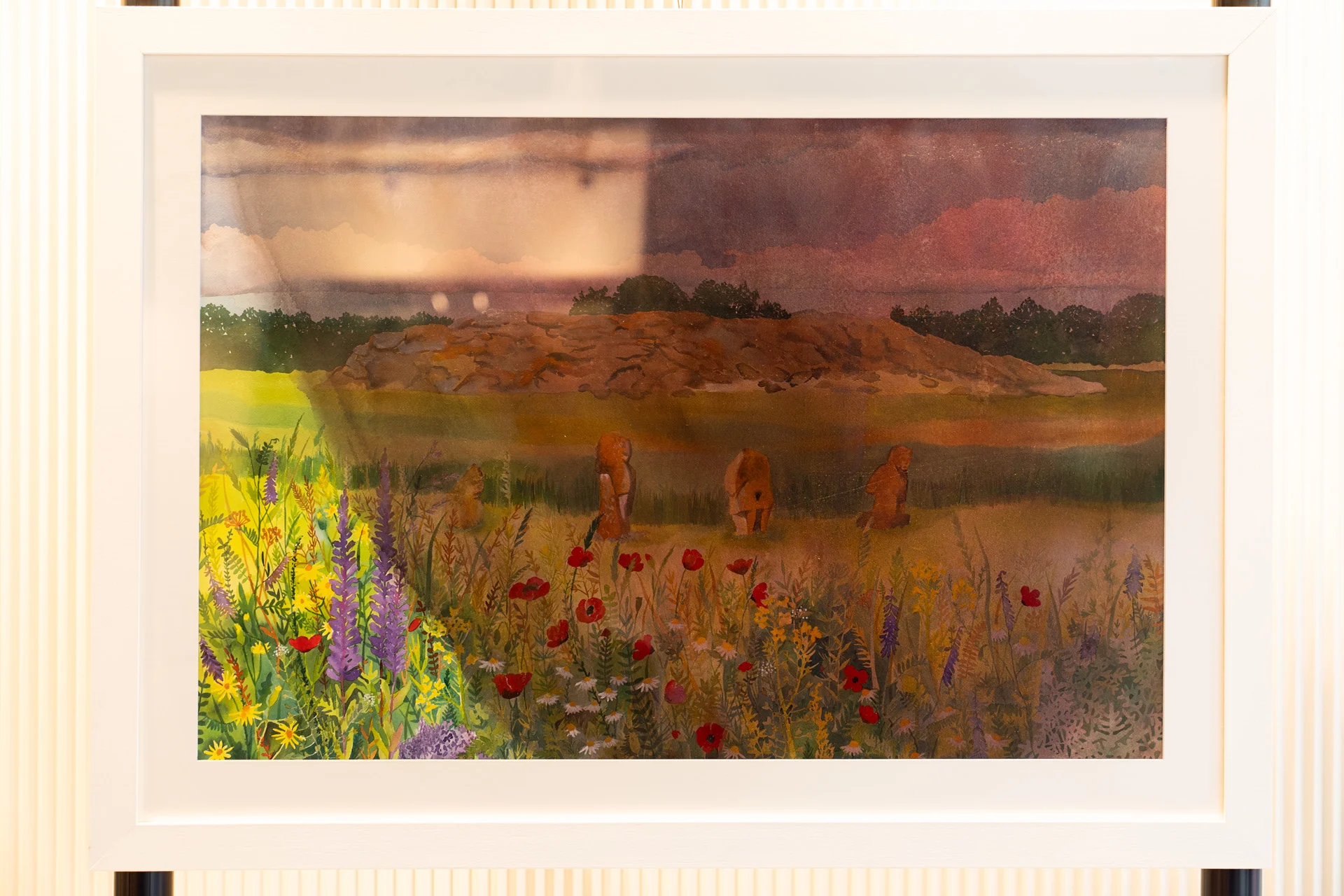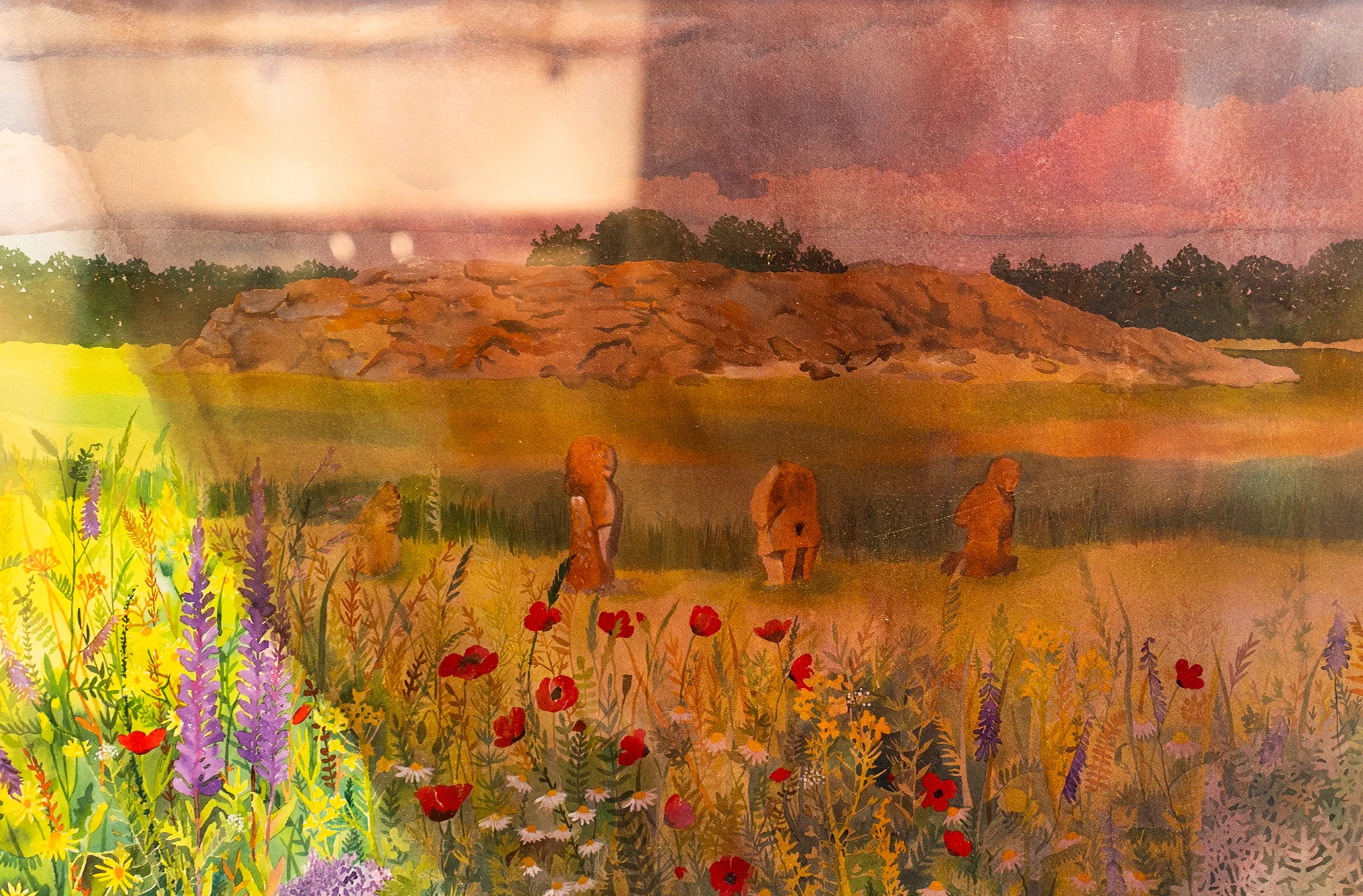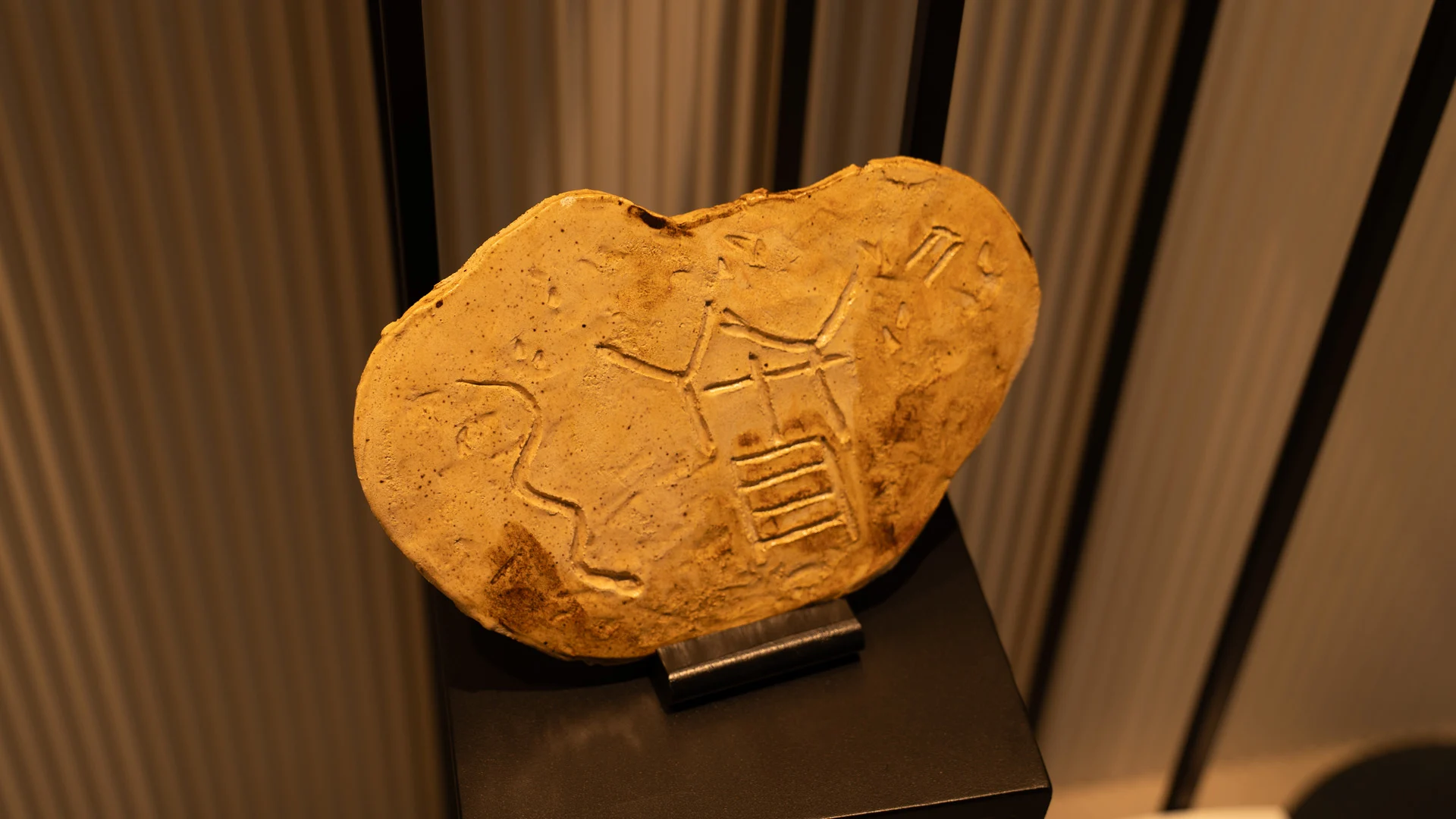
Vitaliia Kalmutska revisits the concept of liminality by concentrating on Kam’yana Mohyla (Stone Tomb); a natural location in the temporary occupied Zaporizhzhia region of Ukraine. This revered site, a geological sandstone formation, has served as a ritual landmark for thousands of years, spanning from the Paleolithic era to the present. The site represents the enduring nature of the Earth amidst the transience of human existence.
Although the artist never visited Kam’yana Mohyla in person, her bond with the location is profound, largely through her friend Anya’s photographic archive. Currently, the occupation has rendered this landscape even more liminal, altering a sacred and natural environment into an uncertain and perilous territory. The darkness depicted in the film’s images embodies the same sense of loss and non-existence that the artist felt during the onset of the war, when she was trapped with her children in the partially occupied Bucha.
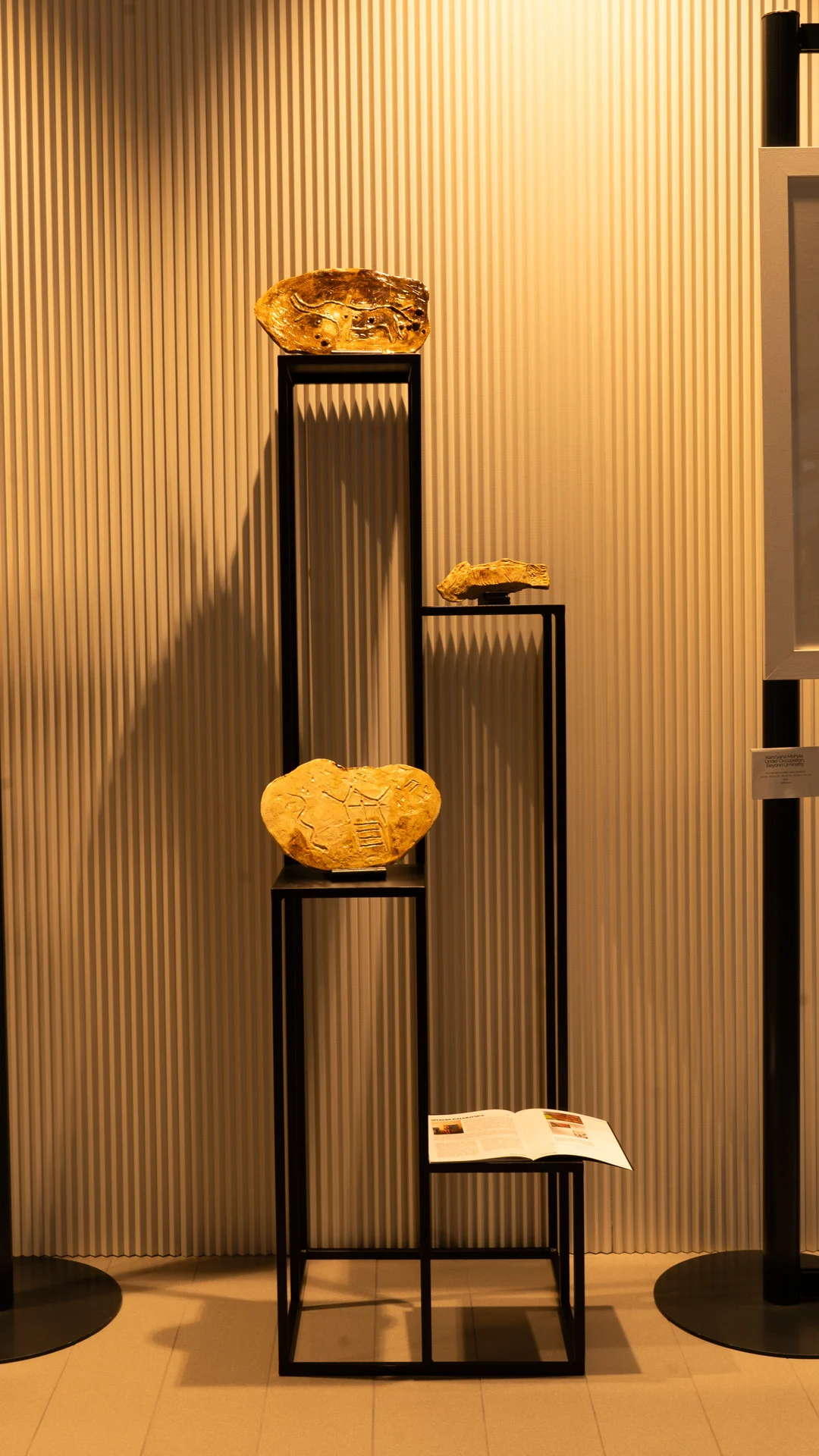
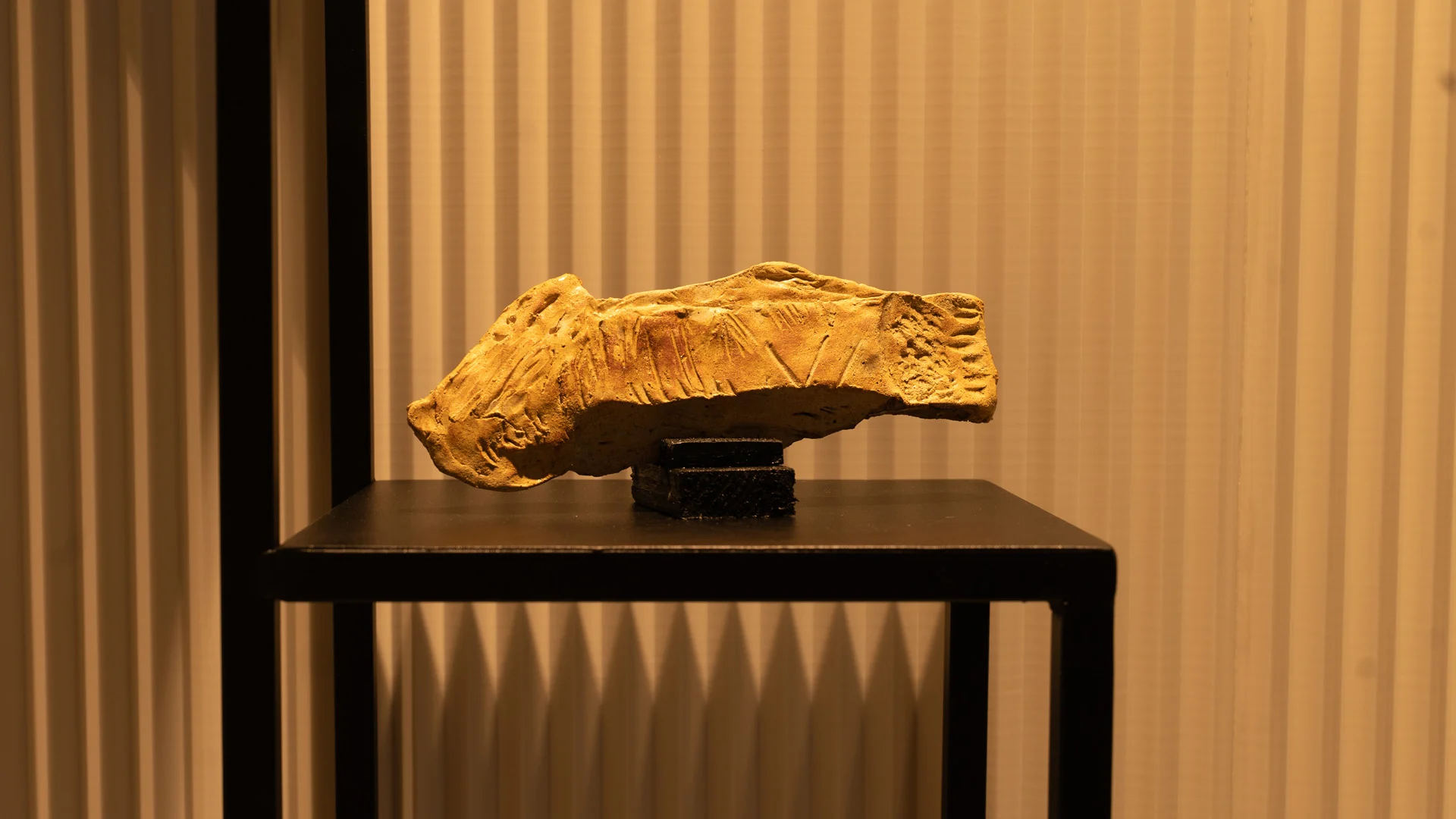
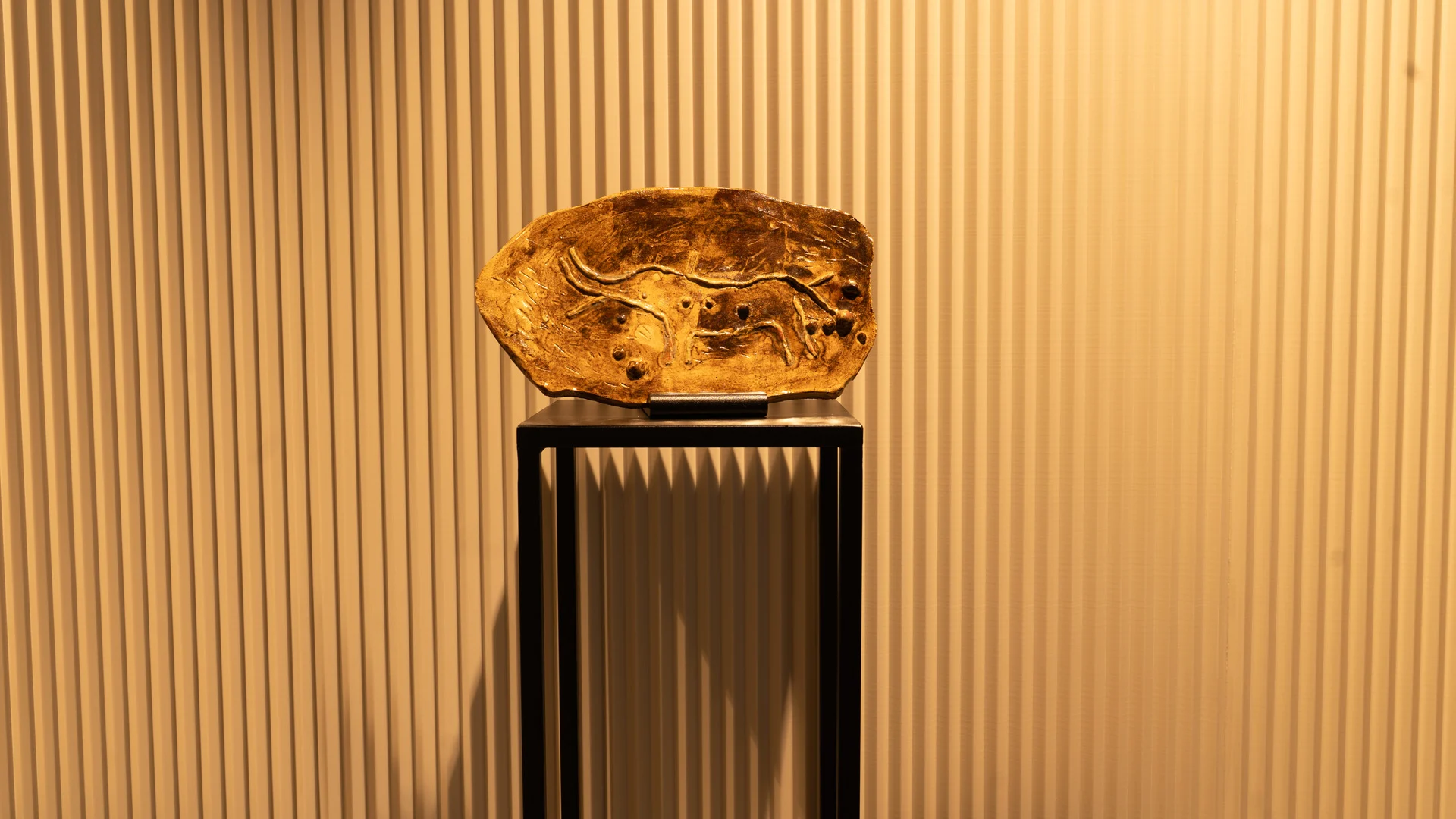
Vitaliia Kalmutska’s project “Kam’yana Mohyla. Under occupation. Beyond liminality” features three sculptures that uncover the essence of the historical site’s cave, representing the devastation caused by war and occupation. One sculptural component represents a Churinga (prehistoric, engraved sandstones), one of many sacred artifacts that were stolen from the Melitopol museum, which, in the context of Kalmutska’s work, symbolizes historical violence and the erosion of cultural heritage.
The artwork of Vitaliia Kalmutska not only delves into the historical memory of the Ukrainian people and culture but also mirrors the conditions of uncertainty and transformation encountered during wartime, where the past and the future converge on a “border” that provides no certainties.